Solid - liquid phases, Chemistry

Assignment Help:

In the cases that we carried out in lectures we assumed that, in scaling up:

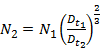
If the TIP Speed was constant then 890_Solid - Liquid phases.png(Note: Because Da and Dt are constructed at a fixed ratio we can also write,  
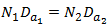

1728_Solid - Liquid phases1.png

We also showed that when considering the Power/Unit Volume
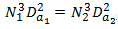
479_Solid - Liquid phases2.png and because Da and Dt are constructed at a fixed ratio we can also write, 708_Solid - Liquid phases3.png
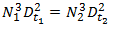
This gives 972_Solid - Liquid phases4.png

Use the same agitation system as in CASE 1 and the previously given values of Dt, Da, W and J. This tank now needs to be scaled up to a vessel that has a volume Z times as large.This has to be done for the following requirements:

(a) Equal rates of mass transfer for the production of the fine chemical are required. This is often required for certain types of organic synthesis. Mass Transfer is usually occurring between solid-liquid phases or liquid-liquid phases

(b) Equal liquid motion is needed. This is often required for kinetically controlled systems where liquid blending is occurring.

When you have produced the scale up dimensions using geometric similarity, calculate the Power/Unit Volume for cases (a) and (b) and discuss the answers.

Studies show that for equal mass transfer in scale up that the 2/3 power equation should be used and for equal liquid motion the 1.0 power equation should be used. In doing the scale up it is appropriate to use the Length Ratio (Length Factor) as used in the second Case Study in Lectures.


Related Discussions:- Solid - liquid phases

Help, what is the trend for ionization energy and metals in the periodic ta...

what is the trend for ionization energy and metals in the periodic table

Ionic bonds are usually formed by combination of elements, Ionic bonds are ...

Ionic bonds are usually formed by combination of elements with: (1) High ionisation potential and low electron affinity (2) Low ionisation potential and high electron affini

Explain about dihalide, Q. Explain about Dihalide? Dihalides: Dichlorid...

Q. Explain about Dihalide? Dihalides: Dichlorides and dibromides are formed by the lower members of the group, viz., Se, Te and Po. These are formed mainly by dissociation of t

P- block elements, what are the chemical poperties of p-block elements ?

what are the chemical poperties of p-block elements ?

Assignment, State 2nd law of thermodynamics in many forms as possible and s...

State 2nd law of thermodynamics in many forms as possible and show that they are identical in figures?

Electronic configuration of ferric ion is, Electronic configuration of ferr...

Electronic configuration of ferric ion is: (1) [Ar] 3d 5                           (2) [Ar] 3d 7            (3) [Ar] 3d 3           (4) [Ar] 3d 8 Ans:  [Ar] 3d 5

Explain fully the potential health hazards, An analysis of the state of the...

An analysis of the state of the Brazilian chemical industry in 1998 revealed that the actually used technologies were transferred in a period where industrial waste generation, tre

Write Your Message!

Captcha
Free Assignment Quote

Assured A++ Grade

Get guaranteed satisfaction & time on delivery in every assignment order you paid with us! We ensure premium quality solution document along with free turntin report!

All rights reserved! Copyrights ©2019-2020 ExpertsMind IT Educational Pvt Ltd