Short run versus long run, Microeconomics

Assignment Help:

The Short Run versus long Run

- Short-run:

  • Period of time in which the quantities of one or more production factors cannot be changed.
  • These inputs are called as fixed inputs.

- Long-run

  • Amount of time required to make the entire production inputs variable.
    1714_short run vs long run.png

    Observations:

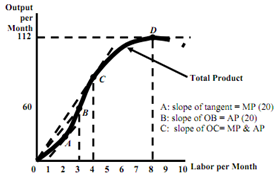
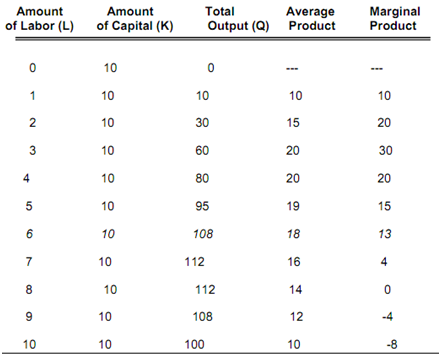
 1)  With the additional workers, output (Q) increases, reaches the maximum limit, and then decreases.

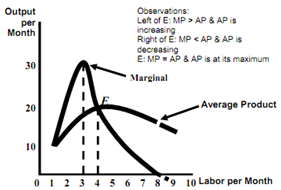
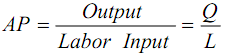
  2) The average product of labor (or AP), or output per worker, increases 1st and then decreases.
1301_short run vs long run1.png

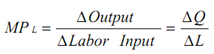
3) The marginal product of labor (or MP), or output of additional worker, increases quickly initially and then decreases and becomes negative.
1062_short run vs long run2.png


2430_short run vs long run3.png

401_short run vs long run4.png

Observations:

- When MP = 0, TP is at the maximum

- When MP > AP, AP is gets increased

- When MP < AP, AP  is gets decreased

- When MP = AP, AP is at the maximum

AP = slope of line from the origin to a point on TP, lines b, and c.

 MP = slope of a tangent to any point on the TP line, lines a and c.


Related Discussions:- Short run versus long run

Natural factors and availability of credit, Natural Factors: Seasonal va...

Natural Factors: Seasonal variations may affect the demand for a commodity at certain times of the year. For example, during the raining season, demand for commodities such as j

What is economic theory, What is Economic Theory? An economic theory th...

What is Economic Theory? An economic theory that can be considered an axiomatic approach comprise a set of assumptions and circumstances, an analytical framework and explanatio

What is ceteris paribus, What is ceteris Paribus?  Ceteris paribus is a...

What is ceteris Paribus?  Ceteris paribus is a Latin phrase, literally translated as "other things the similar," and usually rendered in English as "all other things being equa

Describing risk, Describing Risk * To measure risk we should know:  ...

Describing Risk * To measure risk we should know:  1) All the outcomes which are possible.  2) The probability that each outcome will occur. * Interpreting Probability

Problem in measuring depreciation, Economists view depreciation as capital ...

Economists view depreciation as capital consumption for them, there are two distinct ways of charging for depreciation (1) the depreciation of equipment must equal its opportunity

Narrowness of definition of the commodity, Explain why each of the followin...

Explain why each of the following factors may influence the own price elasticity of demand for a commodity. (i) Consumer preferences, that is, whether consumers regard the commodi

Write Your Message!

Captcha
Free Assignment Quote

Assured A++ Grade

Get guaranteed satisfaction & time on delivery in every assignment order you paid with us! We ensure premium quality solution document along with free turntin report!

All rights reserved! Copyrights ©2019-2020 ExpertsMind IT Educational Pvt Ltd